
Inhoudsopgave
- Wat je moet weten voordat je begint
- Het rookpunt van extra virgin olijfolie: feiten en misverstanden
- Verschil tussen extra vierge en milde olijfolie bij warmtebereiding
- Stap voor stap: koken met extra virgin olijfolie
- Wanneer je extra virgin olijfolie koud gebruikt
- Hoe je extra virgin olijfolie correct bewaart
- Gezondheid en voedingswaarde bij verhitting
- Praktische tips voor dagelijks gebruik
Laatst bijgewerkt: 11 augustus 2026
Wat je moet weten voordat je begint
Extra virgin olijfolie is niet what most home cooks think it is. Het echte probleem is niet óf je ermee kunt koken - dat kan absoluut - maar hoe en wanneer. Extra virgin olijfolie is gemaakt voor smaak, niet voor hoge temperaturen. That doesn't mean it's unsuitable for cooking; it means you need a different approach than standard recipes suggest.
When you understand what happens to extra virgin olijfolie under heat, you can use it far more effectively. This isn't about restriction. It's about strategy.
Het rookpunt van extra virgin olijfolie: feiten en misverstanden
De verwarring over het rookpunt begint hier. De populaire bewering is dat extra vierge olijfolie een laag rookpunt heeft en niet gebruikt mag worden om te koken. Deze halve waarheid doet meer kwaad dan goed.
Extra virgin olijfolie typically smokes between 160°C and 190°C, depending on quality and origin. Maar dit is wat telt: het rookpunt is niet het moment waarop olijfolie giftig wordt. Het is wanneer het begint te roken en smaak verliest - twee totaal verschillende dingen. Oxidation, the process where oils break down, happens gradually, not suddenly at one magic temperature.
Het echte onderscheid is tussen licht roken en zwaar roken. Een beetje rook ruïneert de olie niet. Zware rook betekent dat je de smaak verloren hebt en iets anders moet gebruiken.
Verschil tussen extra vierge en milde olijfolie bij warmtebereiding
Extra vierge en milde olijfolie zijn fundamenteel verschillend, niet zomaar verschillende versies van hetzelfde.
Extra virgin olijfolie is made by cold-pressing olives, which preserves aromatic compounds, polyphenols, and the subtle flavors you taste. These same compounds are why the smoke point is lower, they're less heat-resistant than pure fatty acids. Mild or refined olijfolie removes many of these aromatic compounds through refinement, raising the smoke point to around 210°C and creating a neutral flavor. What remains is primarily pure fatty acids without complexity.
For high-temperature cooking, mild olijfolie is the better choice. For medium-heat sautéing where you want flavor, extra virgin wins. Professional kitchens use both: extra virgin for finishing and cold applications, mild for heat cooking. This isn't compromise, it's efficiency. You don't pay for advanced flavor if you're going to burn it away.
| Olijfolietype | Rookpunt | Beste gebruik | Smaakprofiel |
|---|---|---|---|
| Extra virgin | 160-190°C | Sauteren, lage-medium warmte, afwerking | Voluit, complex, fruitig |
| Milde/Raffinage | 210°C+ | Hoge warmte, braden, frituren | Neutraal, subtiel |
Stap voor stap: koken met extra virgin olijfolie
Stap 1: Kies de juiste pan en temperatuur
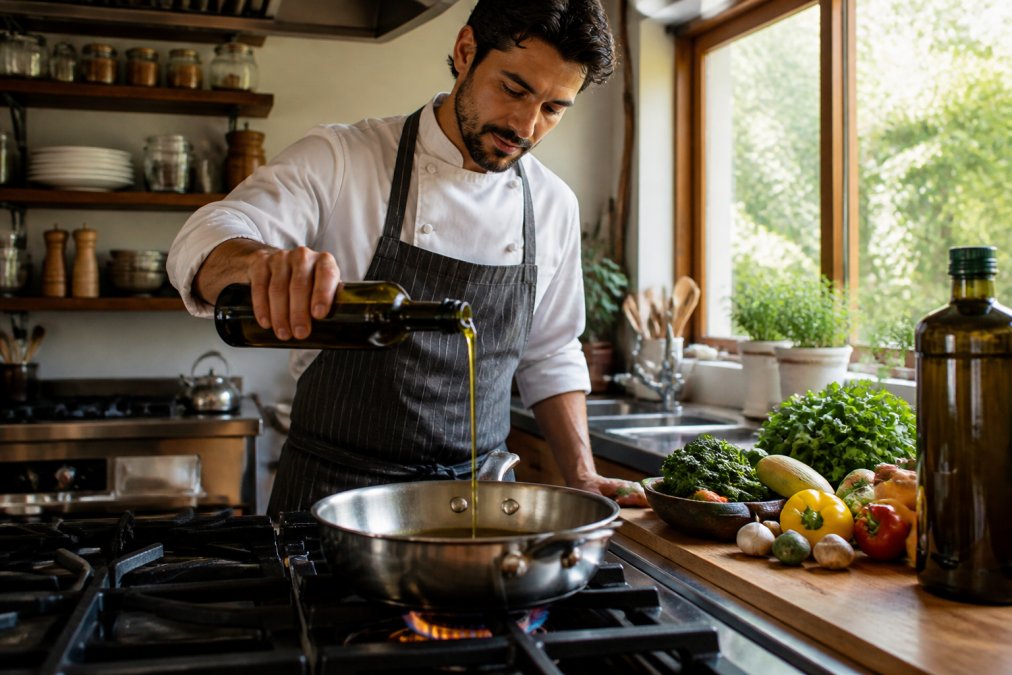
Zware pannen - gietijzer, roestvrij staal - verdelen de warmte beter dan dunne, waardoor je meer temperatuurcontrole hebt. Begin met een schone pan; restjes van eerder koken zorgen ervoor dat olijfolie sneller oxideert. Set your heat to medium, not higher. This isn't caution; it's how you get the best result.
Wait until the pan is warm before adding olijfolie. Een koude pan met koude olie is inefficiënt en kookt ongelijkmatig. But don't let it get hot, you want the oil to warm gently, not smoke immediately.
Stap 2: Voeg olijfolie toe op het juiste moment
Voor het sauteren voeg je olijfolie toe wanneer de pan warm is, laat je het kort opwarmen en voeg je dan ingrediënten toe. Dit gebeurt snel - je hebt maar een paar seconden nodig. For slower cooking like building a sauce base, you can add olijfolie earlier since the lower temperature gives you more time before smoking begins.
A common mistake is using too much. This wastes oil and raises the temperature faster, making control harder. Start with a generous pour, not a bath.
Stap 3: Controleer de temperatuur tijdens het koken
Cooking with extra virgin olijfolie requires attention. If you see it starting to smoke, lower the heat immediately. The oil should look glossy and move lightly in the pan, not still, but not wild either. If it begins to steam, it's time to adjust.
Some dishes need higher heat for brief moments. If you're searing something quickly and removing the pan from heat right away, you can go higher. But this is exceptional, not routine.
Wanneer je extra virgin olijfolie koud gebruikt
This is where extra virgin olijfolie truly shines. Cold use, in salads, as a finish, in dips, is where flavor reaches its full potential.
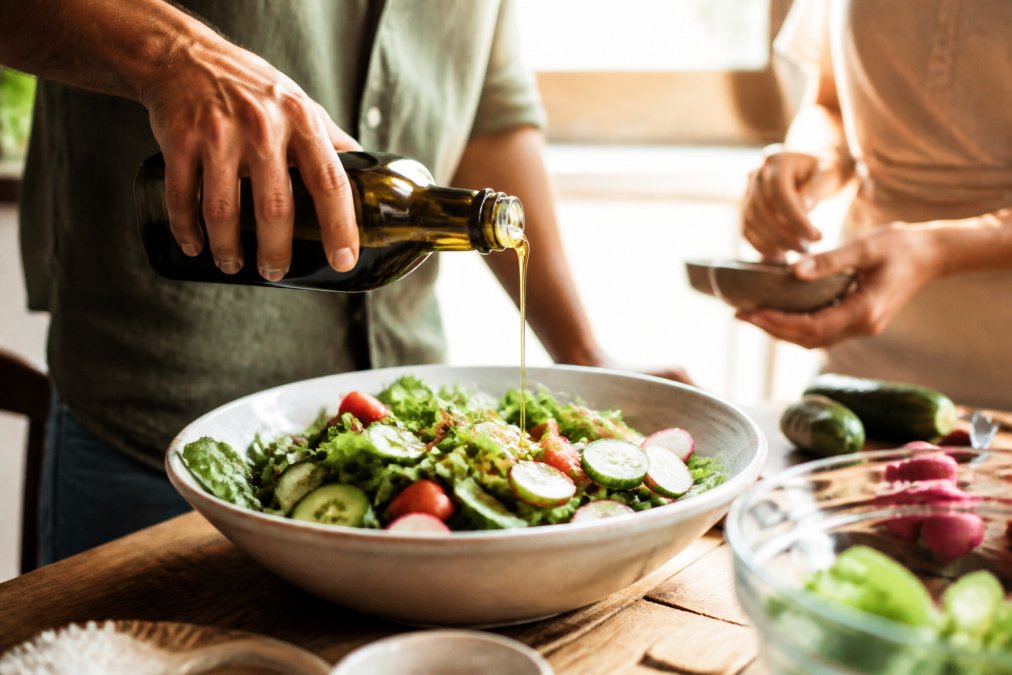
No oxidation, no flavor loss, no compromises. The polyphenols and aromatic compounds stay intact. This is where quality matters most. A small amount of good oil does more than much poor oil. Use extra virgin olijfolie to finish dishes, a bowl of soup, a plate of vegetables, a piece of bread. A drizzle of quality oil transforms simplicity.
If you're serious about mastering these techniques and want to deepen your understanding of how different oils perform in the kitchen, kookworkshops voor groepen en individuen offer hands-on experience with premium oils and professional guidance.
Hoe je extra virgin olijfolie correct bewaart
Storage determines how long olijfolie stays good. Extra virgin is more sensitive than refined versions because all the flavor compounds remain intact. These compounds oxidize if you're not careful.
Store olijfolie in a dark bottle, not clear glass. Light degrades quality. Temperature matters too, a cool cupboard beats above your stove, even if that's more convenient. Keep the cap tight; oxygen slowly oxidizes the oil over time. Check the harvest date if available. Fresh olijfolie, less than a year old, tastes better and contains more beneficial compounds.
Gezondheid en voedingswaarde bij verhitting
Fear about heating extra virgin olijfolie stems from misunderstanding what happens chemically. It's not one moment when everything goes wrong, it's a gradual process you can understand and control.
Extra virgin olijfolie contains polyphenols, natural antioxidants that deliver many health benefits. These compounds are heat-sensitive but not fragile. Research shows polyphenols decline only 10 to 20 percent over several minutes of cooking at temperatures up to about 180°C. At 160°C, where most home cooks operate, losses are even smaller. The key insight: polyphenols don't vanish suddenly; they decline gradually as temperature rises and cooking time increases.
The unsaturated fatty acids in olijfolie, especially oleic acid, which makes up about 70 percent of extra virgin olijfolie, are relatively heat-stable. These are the same fatty acids that protect your heart. They don't break down at normal cooking temperatures. What does happen is oxidation: oxygen reacts with the oil, especially with prolonged heat exposure and air contact. This creates free radicals, but only if you let the oil smoke heavily or reheat it repeatedly.
The difference between careful sautéing and smoking oil is crucial. Gentle sautéing at medium heat (around 160-170°C) preserves most health benefits. Polyphenols decline, but you retain the majority. Heavy smoking (above 190°C with visible smoke) or repeatedly reheating the same oil creates compounds you'd rather avoid. But this applies to all oils and fats, not just olijfolie.
A practical example: making an omelet with extra virgin olijfolie on medium heat, done in two minutes, retains far more polyphenols than the same omelet in a deep fryer. Time and temperature together determine losses, not temperature alone.
The health benefits of olijfolie, cardiovascular support, anti-inflammatory effects, protection against oxidative stress, are well-documented. These decline with heating but don't disappear. A bowl of soup finished with extra virgin olijfolie gives you more polyphenols than the same soup without oil. Vegetables cooked gently in extra virgin olijfolie on medium heat deliver more health benefits than the same vegetables in refined oil at higher temperature.
The key is conscious choice: use extra virgin olijfolie where it counts, for flavor and health, where temperature stays low enough to preserve both. For high-temperature cooking, where flavor is lost anyway, refined oil makes sense, saving your premium oil for where it truly matters.
Praktische tips voor dagelijks gebruik
The best way to use extra virgin olijfolie is knowing where it really makes a difference.
Waar extra virgin olijfolie schittert:
Salads are the obvious example, but it goes deeper. A simple salad with greens, tomato, and salt, here olijfolie determines 80 percent of the flavor. Every nuance counts. Good extra virgin olijfolie makes this dish. Poor oil makes it dull. The same applies to bread with oil and salt, hummus, gazpacho. These are dishes where olijfolie plays the lead role.
Earthy vegetables like carrots, squash, or beets, cooked gently and finished with extra virgin olijfolie, gain depth and character. The warmth activates the aromatic compounds without burning them. This is where you get full value.
Fish and seafood, especially raw or lightly prepared, are partners for extra virgin olijfolie. A plate of oysters with a drizzle of oil, smoked salmon with olijfolie and lemon, you're not adding; you're enhancing.
Waar extra virgin olijfolie minder zinvol is:
Searing meat at high temperature. The olijfolie flavor vanishes in the Maillard reaction. You pay for something you won't taste. Use refined olijfolie or another fat. You get the same result for less money.
Deep frying. The temperature is too high, the exposure too long. Your olijfolie burns without benefit. Refined olijfolie or another fat is logical here.
Long braises where vegetables stew for hours. The olijfolie flavor disappears in the extended process. Start with refined oil, add extra virgin at the end if you want.
Praktische werkwijze:
Buy two olijfoliën: one refined for heat cooking, one extra virgin for finishing and cold applications. This isn't expensive, you use far less extra virgin when you deploy it strategically. A bottle lasts much longer when used purposefully.
Learn your stove. Every burner burns differently, every pan distributes heat differently. What's medium on your stove might be low on someone else's. This isn't exact science; it's observation. Set your pan to medium, add oil, and watch what happens. Adjust.
Experiment with timing. For sautéing: warm pan, add oil, immediately add ingredients. For slow cooking: add oil earlier, lower heat. For finishing: always at the end, never before. These aren't rules; they're patterns that work.
Watch your oil visually. You want it glossy and moving lightly in the pan. Not still (too cold), not wild (too hot). If it starts to steam, lower the heat immediately. This takes one second and prevents problems.
Store your olijfolie properly. A dark bottle, cool but not refrigerated, tightly sealed. This determines how long it stays good and how much flavor you retain. An opened bottle stays good for months, but quality gradually declines. Use your olijfolie within a year for best results.
For those interested in exploring premium oils and their culinary applications more deeply, Aurelia Oils offers a curated selection of extra virgin olijfolies for home cooks, along with resources to help you choose the right oil for your kitchen.
Veelgestelde Vragen
Wat is het rookpunt van extra virgin olijfolie en waarom is dit belangrijk?
Extra virgin olijfolie heeft een rookpunt tussen 160-190°C, afhankelijk van de oogst en verwerking. Dit is hoger dan veel mensen denken. Het rookpunt markeert het moment waarop de olie begint af te breken en schadelijke stoffen ontstaan. Voor normale huishoudelijke bereiding, zachtjes bakken, sautéren op medium warmte, blijf je ruim onder dit punt. Alleen bij extreem hoge temperaturen (frituren, searing op hoog vuur) ontstaat echt risico.
Verliest extra virgin olijfolie haar gezondheidsvoordelen bij het koken?
Niet volledig. Extra virgin olijfolie bevat polyfenolen en andere antioxidanten die gedeeltelijk afbreken bij warmte, maar niet helemaal verdwijnen. Bij matig koken (tot ongeveer 160°C) behoud je het grootste deel van de voedingswaarde. De onverzadigde vetzuren, die essentieel zijn voor hart- en vaatgezondheid, blijven stabiel tot aan het rookpunt. Voor maximale gezondheidsvoordelen combineer je gekookt gebruik met rauwe toepassing in salades en dips.
Hoe weet ik of ik echt extra virgin olijfolie koopt en niet alleen iets met een mooie naam?
Echte extra virgin olijfolie moet gecertificeerd zijn volgens Europese normen. Controleer op het etiket: oogstdatum (niet alleen 'verpakkingsdatum'), herkomst (liefst specifiek land of regio), en vermelding van koude persing. Veel premium producenten vermelden ook polyfenolgehalte. Een betrouwbare leverancier geeft inzicht in hun productieproces en kan certificaten tonen. De smaak verschilt opvallend van goedkope alternatieven: echte extra virgin heeft een groen aroma, soms een licht bittere afdronk, en nooit een muf of ranzig karakter.
Kan ik extra virgin olijfolie gebruiken voor alle soorten koken?
Niet voor alles, maar voor meer dan je misschien denkt. Extra virgin is ideaal voor zachtjes bakken, sautéren op medium warmte, en braden op laag tot medium vuur. Het werkt perfect in pasta, risotto, groenteschotels en vis. Waar je voorzichtig moet zijn: frituren en searing op zeer hoog vuur vragen om oliën met hoger rookpunt. Voor dagelijks koken op normale temperaturen is extra virgin olijfolie echter een uitstekende keuze, vooral omdat de smaak je gerechten verrijkt.
Koken met extra virgin olijfolie is niet moeilijk. Het is alleen anders dan wat je misschien hebt geleerd. Wanneer je begrijpt dat het niet om verbod gaat, maar om strategie, opent zich een hele wereld van mogelijkheden. Goed olijfolie, gebruikt met aandacht, maakt je eten beter, niet alleen in smaak, maar ook in voeding. Dat is geen marketing. Dat is voeding.
This article was written using GrandRanker